
Can I have implants?
Most adults with good dental and general health will be suitable for dental implants. However, every case is different so it’s important to speak to your dentist.
Who might not be suitable?
Young people whose mouths and jawbones are still growing are usually not suitable. Anyone who smokes or drinks heavily may also not be suitable for treatment. These habits increase the risk of problems with treatment so some dentists will wait until the behaviours are changed before placing dental implants.
In addition, people who have gum disease may need to improve the health of their gums before dental implants could be considered. Those who are more susceptible to gum disease will be at a higher risk of developing problems, both in the short and long term, with their dental implant.
What is periodontal (gum) disease?
Periodontal disease affects the gums, bone and other supporting tissues of the teeth. Although most individuals suffer gum inflammation from time to time, around 10% of the population appear to suffer from the more severe forms of the disease which cause loss of supporting bone. This group appears to be at greatest risk of losing teeth through periodontal disease. It is caused by the bacteria which regularly collect on the teeth.
How would I know if I have gum disease?
The signs and symptoms of periodontal disease vary significantly but may include gums that bleed when brushing, together with signs of more advanced disease such as movement or drifting of the teeth. However, it is possible to have the disease and not be aware of these signs. It is essential to see your dentist regularly so that special assessment techniques, sometimes including x-rays, can be carried out as part of your routine dental examinations. This information and more is available from the British Society of Periodontology.
How do you know if you’re suitable?
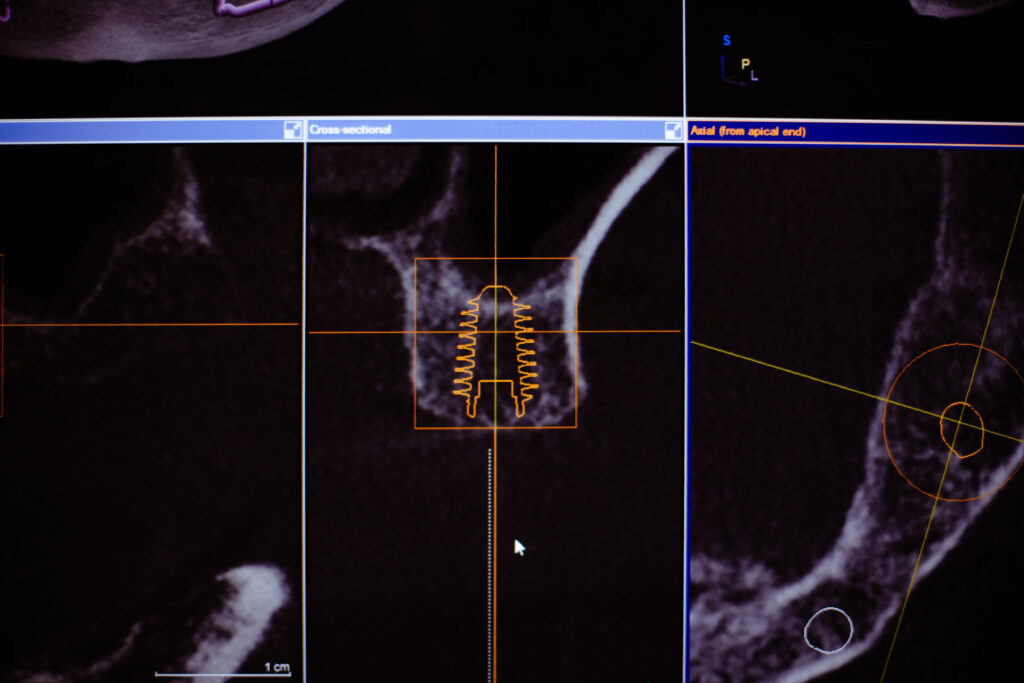
We will perform a thorough assessment of your mouth and discuss your treatment options with you. Planning for dental implants usually involves a three-dimensional (3D) X-ray called a CT or CBCT scan. This allows us to choose the most suitable length, width and type of dental implant for you.
Is it expensive?
Dental implants involve cutting-edge technologies and products, and we have to undergo extensive clinical training to offer this treatment. Therefore, the cost of dental implants reflects the complexity of the procedure and the skill of the dentist. The cost for
a full mouth rehabilitation with dental implants is similar to that of a knee replacement done privately. Both these procedures will improve your health and quality of life for years to come. To make the treatment more affordable many practices offer payment plans to spread the cost of treatment.